

Every website redesign raises the same question for ambitious companies in Belgium and northern France: how to maximize conversion while gaining visibility on Google. Making the right decisions in the early stages can transform a site into a real business asset. Discover how a structured approach, focused on measured performance and strategic analysis, lays the foundations for measurable and sustainable digital growth.
Table of contents
- Step 1: Define objectives and analyze existing situation
- Step 2: Structuring the tree structure and planning content
- Step 3: Designing conversion-oriented mock-ups
- Step 4: Develop and integrate with SEO optimization
- Step 5: Verify, test and measure performance
Quick summary
| Key point | Explanation |
|---|---|
| 1. Define clear objectives | Before you start redesigning, set clear objectives to guide your decisions and actions. |
| 2. Analyze the current site | Carry out an in-depth diagnosis to identify strengths and weaknesses, using relevant analysis tools. |
| 3. Create an intuitive tree structure | Design a site structure that’s easy to navigate, with pages organized in a logical and accessible way. |
| 4. Focus on conversion | Develop layouts that guide users to the desired action, with well-thought-out visual elements. |
| 5. Measure and optimize performance | Use analysis tools to track results and adjust your strategies to improve user experience and SEO. |
Step 1: Define objectives and analyze existing situation
The first crucial step in any web redesign is to precisely define your strategic objectives and carry out an in-depth diagnosis of your current website. This preliminary phase will determine the success of your digital transformation project.
To begin with, you need to conduct an exhaustive analysis of your existing site, using several evaluation angles. Here are the key dimensions to examine:
- Technical performance: loading speed, mobile compatibility, technical structure
- User experience: navigation path, bounce rate, time spent on site
- Conversion: transformation rate, acquisition funnel, friction points
- SEO: current positioning, strategic keywords, domain authority
During this analysis, we recommend using digital project analysis tools to obtain precise, objective data. These tools will enable you to quantify current performance and identify potential areas for improvement.

Here’s a table summarizing the business impacts of the main dimensions analyzed during a web redesign:
| Dimension assessed | Impact on the company | Success indicator |
|---|---|---|
| Technical performance | Reduced user abandonment | Less than 2s loading time |
| User experience | Increased customer loyalty | Less than 40% bounce rate |
| Conversion | Sales growth | Increased conversion rate |
| Search engine optimization | Increased visibility on Google | Positioning in the top 3 |
The aim is to transform your website into a strategic tool aligned with your business ambitions. Each improvement must meet a specific need: increasing conversions, improving the customer experience or strengthening your digital visibility.
A precise, objective diagnosis is the key to a successful web redesign.
Pro tip: Involve different departments in your company (marketing, sales, technical) in this analysis phase to get a 360-degree view of the issues at stake.
Step 2: Structuring the tree structure and planning content
Designing an effective web tree is a strategic pillar for optimizing user experience and SEO performance. Your goal is to create an architecture that is clear, intuitive and easily understood by visitors and search engines alike.
To structure your tree structure effectively, start by mapping all your content according to a hierarchical and thematic logic. Here are the basic principles to apply:
- Logical architecture: organize your pages by major content families
- Limited depth: do not exceed 3 navigation levels
- Intuitive navigation: clearly name your sections and sub-sections
- Internal links: create relevant connections between your pages
In the context of technological preparation for 2026, it’s crucial to think of your architecture as flexible and scalable. Anticipate future content and navigation needs by designing a modular structure that can be easily adapted.
Strategic content planning also involves precisely defining the user journey. Each page must have a clear objective: to inform, convert, reassure or guide your prospect towards the desired action.
A well thought-out tree structure transforms navigation into a fluid, natural experience.
Pro tip: Use mind-mapping tools and test your tree structure with a few representative users to validate its ergonomics and intuitiveness.
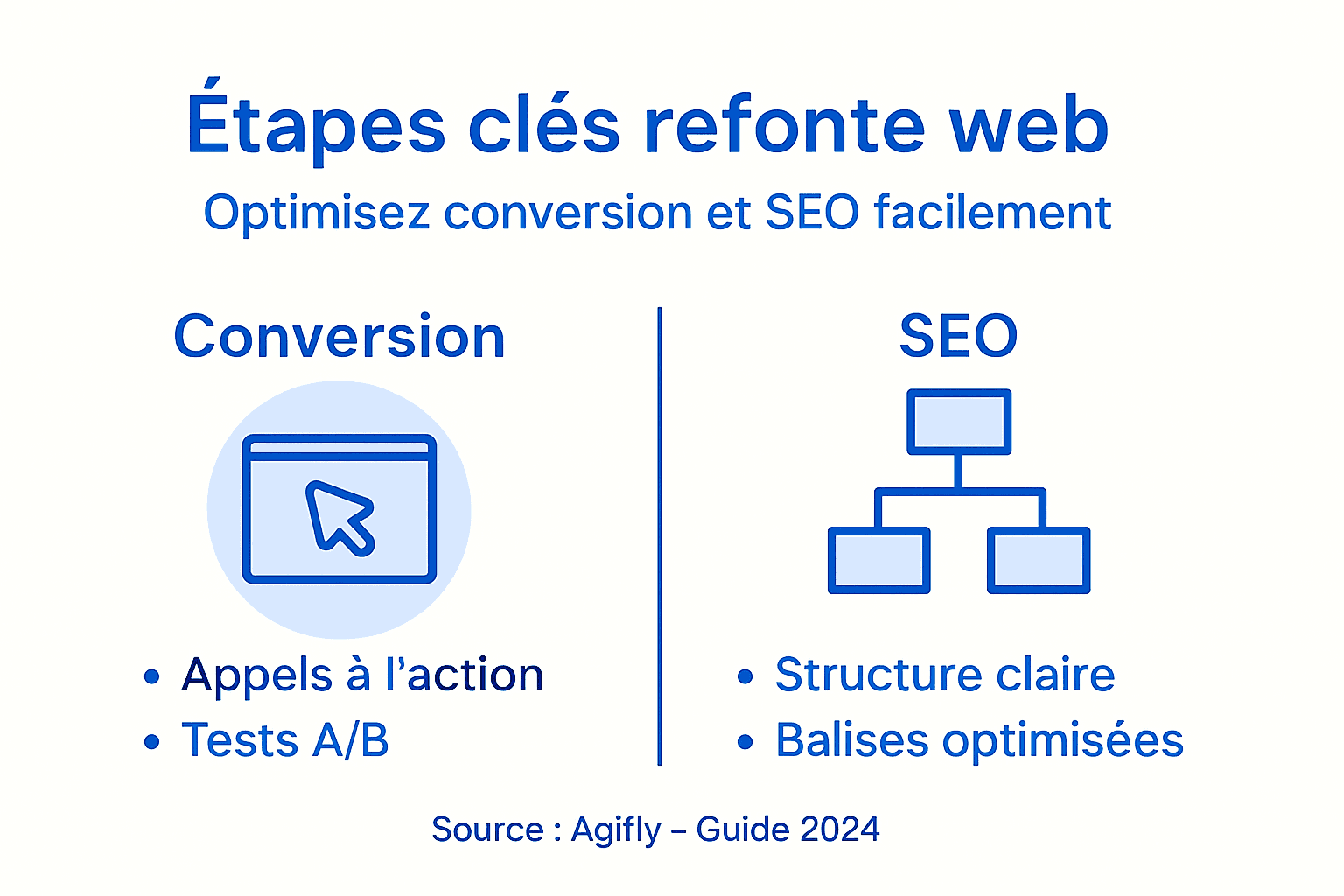
Step 3: Designing conversion-oriented mock-ups
Designing conversion-focused web layouts is a crucial strategic step that transforms your graphical interface into a true marketing performance tool. Your objective: to create a visual experience that naturally guides your users towards the desired action.
To achieve high-performance mock-ups, focus on the principles of user-centered design and conversion:
- Visual hierarchy: guide the eye to key conversion elements
- Calls to action: use clearly identifiable, powerful buttons
- Clean design: minimize distractions that divert attention
- Trust zones: include reassuring elements (reviews, certifications)
As part of your strategic development for 2026, consider creating adaptable, modular mock-ups that anticipate technological evolutions. Each visual element must serve a precise conversion objective, combining aesthetics and performance.
An effective layout is based on a deep understanding of the user journey. Every zone, every button, every graphic element must be thought of as a step that gradually brings your prospect closer to conversion.
Conversion is not an accident, it’s the result of thoughtful, strategic design.
Pro tip: Perform systematic A/B tests on your layouts to scientifically validate your design choices and continually optimize your conversion rates.
Step 4: Develop and integrate with SEO optimization
Modern web development requires an integrated approach, where technical performance and SEO become inseparable. Your objective: build a web architecture that simultaneously meets the requirements of users and search algorithms.
To ensure optimal SEO integration, focus on these strategic dimensions:
- Technical structure: semantic, validated HTML code
- Performance: fast loading times and responsive design
- Content: meta tags, titles and optimized content
- Architecture: relevant internal links and clear tree structure
When developing your site, use SEO techniques to intelligently integrate your strategic keywords. Each technical element must be considered as a potential lever for visibility and performance.
Successful integration requires a holistic approach where front-end and back-end development converge towards common goals of performance and user experience. Code must not only work, it must communicate effectively with search engines.
Optimized web development turns your site into a visible, fast and relevant resource.
Pro tip : Carry out regular technical audits to identify and quickly correct any potential obstacles to your natural referencing.
Step 5: Verify, test and measure performance
Website performance can’t be guessed at – it has to be measured precisely. This crucial step transforms your design hypotheses into concrete, usable data, ensuring that your web redesign really does meet your strategic objectives.
For a complete diagnosis, mobilize a series of specialized tools and metrics:
To choose your performance measurement tools, compare their uses and benefits:
| Selected tool | Main use | Benefits of redesign |
|---|---|---|
| Google PageSpeed Insights | Speed and UX analysis | Identification of urgent optimizations |
| Hotjar | Behavioral observation | Understanding friction points |
| Screaming Frog SEO | Full technical audit | Structural SEO error detection |
| Matomo | RGPD analytics tracking | Customized conversion metrics |
- Technical performance: loading speed, response time
- User experience: bounce rate, time spent on site
- Conversion: conversion rate per page
- Accessibility: compliance with WCAG standards
When analyzing web performance, focus on the Core Web Vitals, which represent the key metrics evaluated by Google. These metrics include loading time, interactivity and visual stability, directly determining your ranking in search results.
Each test must be carried out in different contexts: desktops, tablets, smartphones, with various connections. The aim is to guarantee a fluid, consistent experience, whatever the terminal used.
Performance is not a state, it’s a process of continuous improvement.
Pro tip: Automate your performance tests using tools such as Google PageSpeed Insights, and set up alerts to quickly detect any deterioration.
Turn your web redesign into a lasting success
Maximizing conversion and boosting your SEO requires a precise strategy based on rigorous technical analysis, intuitive architecture and user-friendly design. Faced with these challenges, every step counts to reduce abandonment, increase loyalty and grow your visibility. Discover how our technical and creative solutions align perfectly with these challenges to turn your site into a real growth driver. Put theory into practice with Agifly