

Today, every marketing manager is faced with a strategic question: how do you position your brand in a retail world turned upside down by digital transformation? In Belgium and Northern France, the challenge is no longer simply to adopt the right technology, but to orchestrate a global change that affects processes, customer interactions and value creation. Discover how digital innovation is becoming the cornerstone of differentiation and sustainable performance for retailers.
Table of contents
Key points
| Point | Details |
| Digital Innovation | Digital innovation is not just about technology, but also involves a global strategic transformation of processes and business models. |
| The role of Artificial Intelligence | Artificial Intelligence is revolutionizing customer personalization, enabling real-time recommendations and adaptations. |
| Phygital strategies | Companies need to merge physical and digital experiences to create a seamless, unified customer journey. |
| Adoption challenges | Companies must anticipate high costs and cultural resistance during digital transformation if they are to succeed. |
Definition and challenges of digital innovation
Digital innovation represents a profound transformation of business and organizational models through the use of digital technologies. It is not limited to the adoption of new technological tools, but involves a complete overhaul of processes, interactions and value creation.
Digital transformation is fundamentally changing the way companies operate, innovate and interact with their customers. It encompasses several essential dimensions:
-
Technological transformation
-
Adapting business models
-
Evolving professional skills
-
Reinvention of internal processes
In the retail sector, this digital innovation manifests itself through various strategies aimed at optimizing the customer experience and improving sales performance. Successful companies are those able to seamlessly integrate digital technologies into their ecosystem.
Key technologies for digital innovation:
-
Artificial Intelligence
-
Data analysis
-
Personalized user experience
-
Recommendation systems
-
Process automation
Digital innovation is not just a technological investment, but a truly global transformation strategy. It requires a holistic vision that integrates technology, human resources and organizational processes.
Digital innovation is radically transforming the way companies create, distribute and capture value.
Pro tip: Adopt a progressive, collaborative approach to your digital transformation, involving your teams at every stage of the innovation process.
Different forms of in-store digital innovation
Digital innovations are radically transforming the in-store experience, integrating intelligent technologies that redefine the interaction between customers and points of sale. Phygital technologies now combine the physical and digital worlds to create more dynamic, personalized shopping environments.
The main forms of in-store digital innovation include :
-
Interactive touch-screen kiosks
-
Virtual fitting rooms
-
Dynamic electronic labels
-
Mobile in-store guidance applications
-
Customer recognition systems
Emerging technologies:
-
Recommendation Artificial Intelligence
-
Augmented reality
-
Contactless payment systems
-
IoT sensors for flow analysis
-
Real-time personalization
Each technology aims to smooth the customer journey and enrich the shopping experience. Digital devices now make it possible to collect data in real time, analyze behavior and instantly adapt the offer and merchandising.
Here’s a comparative overview of the impact of the main digital innovation technologies on the retail sector:
| Digital technology | Business benefits | Customer benefit |
| Artificial intelligence | Automated analysis | Personalized recommendations |
| Augmented reality | Immersive in-store experience | Enriched product discovery |
| Contactless payment systems | Shorter checkout times | Fast, smooth payment |
| IoT sensors | Real-time data collection | Optimized purchase path |
In-store digital innovation doesn’t replace people, it enhances them and makes them more effective.
Pro tip: Start by identifying the digital technologies most relevant to your business model and customer type, with a focus on the user experience.
Artificial intelligence and customer personalization
Artificial intelligence is revolutionizing customer personalization, radically transforming the way companies understand and interact with their consumers. Advanced behavioral analysis now makes it possible to create ultra-personalized experiences that exceed traditional marketing expectations.
The main applications of AI in customer personalization include:
-
Real-time product recommendations
-
Individual preference prediction
-
Dynamic price adaptation
-
Personalized conversational assistance
-
Precise behavioral segmentation
Key AI personalization strategies:
-
Multi-channel data collection
-
Granular behavioral profiling
-
Contextual recommendation generation
-
Real-time adaptation of interfaces
-
Predictive personalization of customer paths
The aim is not to replace human interaction, but to enrich it by providing precise insights and tailor-made experiences. AI algorithms analyze thousands of data points to understand the deep motivations of each customer.
Artificial intelligence doesn’t standardize the customer experience, it singularizes it.
Pro Tip: Gradually invest in modular AI solutions that integrate naturally with your existing ecosystem, prioritizing transparency and customer consent.

Phygital strategies and omnichannel in 2026
The digital transformation of retail is reaching a new level with the emergence of phygital strategies, which seamlessly merge physical and digital experiences. Omnichannel integration is becoming a strategic imperative for companies wishing to remain competitive in 2026.
The main areas of phygital development include :
-
Data synchronization between channels
-
Unified customer experience
-
Augmented reality technologies
-
Enriched mobile applications
-
Interconnected buying paths
Emerging phygital technologies:
-
In-store interactive mirrors
-
Contextual geolocation applications
-
Multi-channel customer recognition
-
Instant payments
-
Hybrid virtual assistants
The aim is to create a seamless customer experience that transcends the traditional boundaries between digital and physical. Companies need to rethink their technological infrastructures to enable this continuity.
Phygital isn’t a trend, it’s the new standard for the customer experience.
Pro tip: Invest in agile technology platforms that enable seamless integration between your different customer contact points.
Risks, costs and barriers to adoption
Digital transformation is a complex investment that goes beyond simple technology acquisition. Digital challenges call for a strategic, multidimensional approach.
The main obstacles to digital adoption include :
-
High infrastructure costs
-
Resistance to cultural change
-
Regulatory complexity
-
Need for specialized skills
-
Cybersecurity risks
Main implementation risks:
-
Rapid technological obsolescence
-
Potential data breach
-
Inadequacy with existing processes
-
Unanticipated additional costs
-
Operational disruption
Digital adoption requires a holistic vision that integrates technological, human and strategic dimensions. Companies need to develop a progressive and adaptive approach.
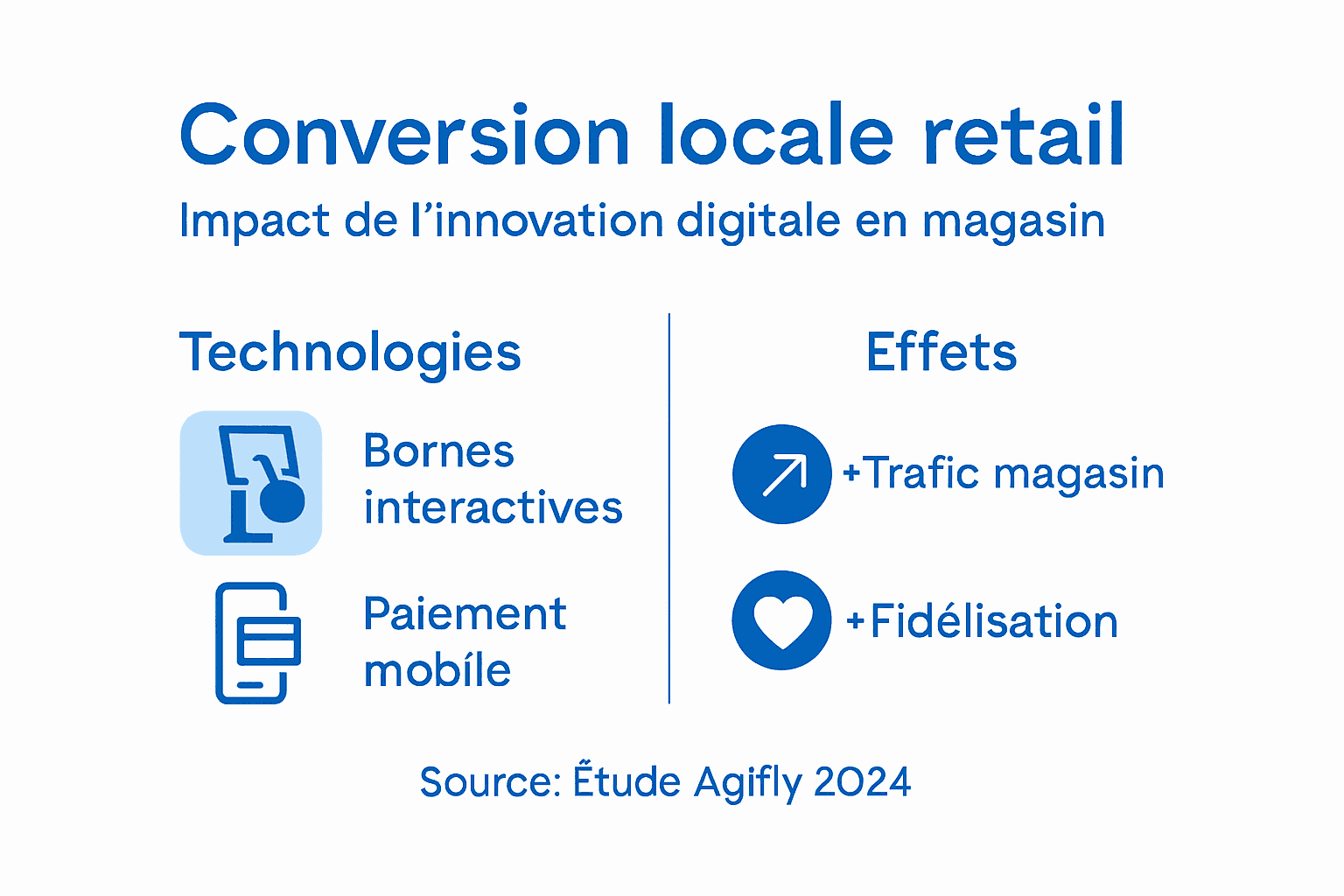
The following table summarizes the main risks and how to mitigate them during digital transformation:
| Major risk | Potential consequence | Mitigation measure |
| Technological obsolescence | Loss of investment | Continuous technological watch |
| Resistance to change | Delayed adoption | Team support |
| Data breach | Loss of customer confidence | Enhanced cybersecurity |
| Unanticipated cost overruns | Reduced profitability | Rigorous budget planning |
Digital transformation isn’t a project, it’s an ongoing cultural transformation.
Pro Tip: Carry out an in-depth technology audit and develop a phased digital transformation roadmap, involving all levels of the organization.
Concrete examples and solutions adapted to the Benelux countries
The Benelux is emerging as a digital innovation laboratory for retail, where companies are developing tailor-made technological solutions. Local innovation enables SMEs to differentiate themselves in a highly competitive market.
Innovative digital solutions in the region include :
-
Mobile geolocation applications
-
Contactless payment systems
-
Digital loyalty platforms
-
Customer customization tools
-
Multifunctional interactive kiosks
Regional innovation strategies:
-
Collaborations between startups and major retailers
-
Technology training programs
-
Public digital support initiatives
-
Investments in emerging technologies
-
Experimental and agile approach
The Benelux ecosystem is characterized by a pragmatic, collaborative approach to digital innovation, where companies pool their resources and knowledge.
Innovation is not a choice, it’s a strategic necessity for Benelux companies.
Pro tip: Choose modular, interoperable technological solutions that enable rapid adaptation to market changes.
Accelerate your retail digital transformation with Agifly
Digital innovation in retail is profoundly transforming customer experience, personalization and local conversion. If you’re looking to overcome the challenges of integrating phygital technologies, artificial intelligence and omnichannel, you’ve come to the right place. At Agifly we understand the importance of a progressive, agile approach to growing your business in this ever-changing digital world. Discover how our intelligent design and scalable development solutions can meet your specific needs.
Unleash the potential of your point of sale with tailor-made digital solutions designed to optimize the customer experience and boost sales. Contact us today at https://agifly.be to build your retail’s digital future together.
Frequently asked questions
What is digital innovation in retail?
Digital innovation in retail refers to the transformation of business models and processes through digital technologies, aimed at improving the customer experience and boosting sales performance.
How does artificial intelligence impact customer personalization in retail?
Artificial intelligence makes it possible to create ultra-personalized experiences by analyzing consumer behavior and proposing product recommendations in real time, thus adapting the offering to customer expectations.
What are the main challenges when implementing digital innovation?
Key challenges include high infrastructure costs, resistance to cultural change, and the need for specialized skills, while managing cybersecurity risks.
How do phygital technologies improve the in-store shopping experience?
Phygital technologies, such as augmented reality and contactless payment systems, create more dynamic and personalized shopping environments, streamlining the customer journey and enriching the shopping experience.