

Modern engineering teams face an unprecedented paradox: the pressure to ship complex, production-ready software faster is at an all-time high, yet the global shortage of experienced senior developers continues to bottleneck delivery. Generative AI tools like Cursor, GitHub Copilot, and Claude Code have entered the scene with massive promises, but early adoption often leads to fragile, ‘AI-generated technical debt’ when organizations assume AI can replace human expertise.
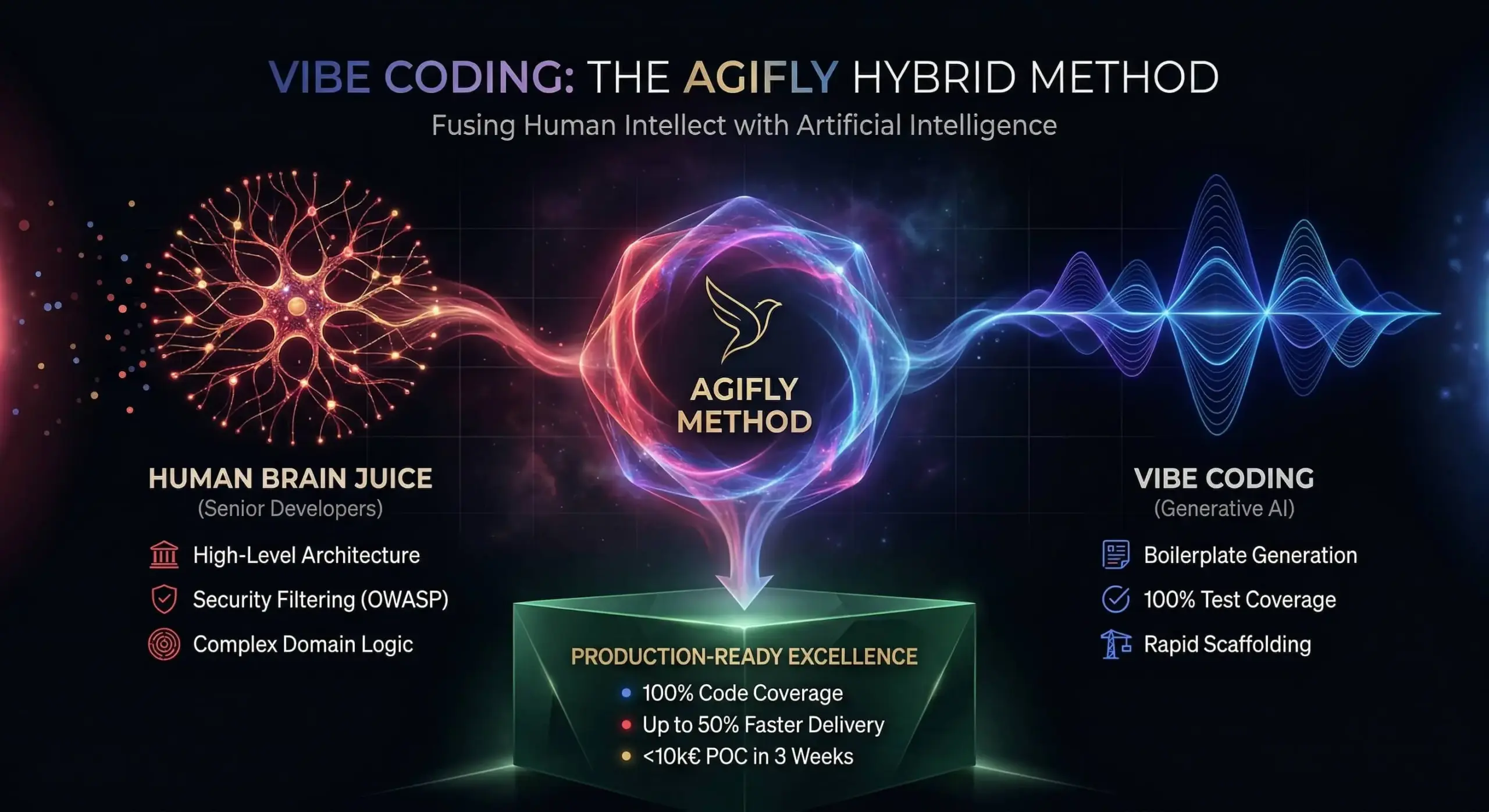
This is where vibe coding, implemented correctly, changes the paradigm. Instead of viewing AI as a replacement for developers, it is a tool that empowers senior engineers to orchestrate logic, achieve 100% test coverage affordably, and dramatically accelerate delivery. Over the past 2 years of intensive R&D, Agifly has perfected a hybrid methodology that merges ‘human brain juice’ with vibe coding. The result? Secure, highly maintainable, production-ready software delivered 35% to 50% faster, and custom Proof of Concepts (POCs) built in just 3 weeks for less than 10,000€.
Quick Summary (If you only read one thing…)
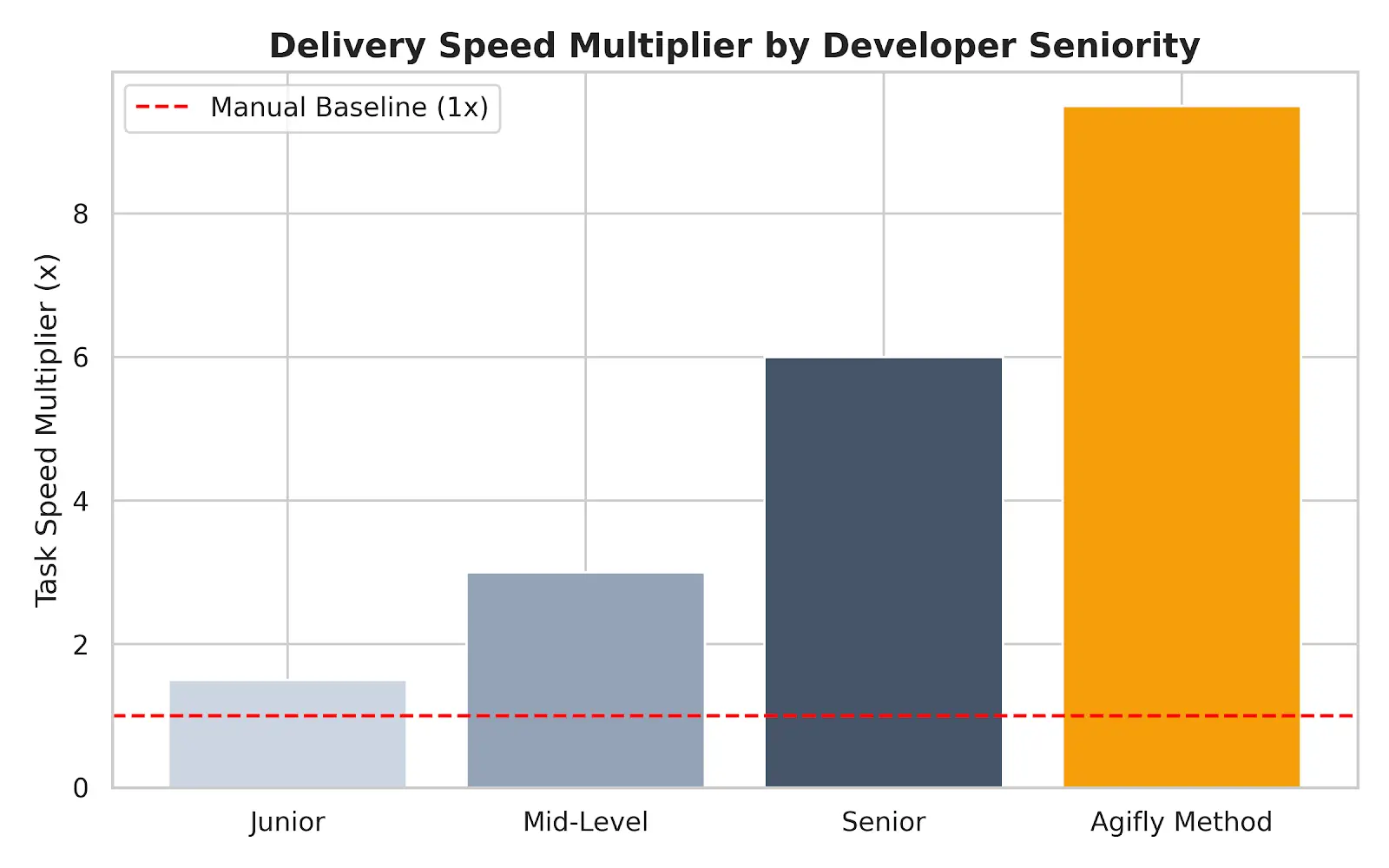
Vibe coding is an AI-accelerated workflow where developers guide Large Language Models (LLMs) through natural language to generate code, tests, and architecture. While it does not mean ‘anyone can code,’ it empowers senior engineers to increase their development speed by up to 5 to 10 times on specific tasks. Through Agifly’s hybrid methodology, this approach ensures production-ready quality, makes exhaustive 100% E2E and unit test coverage economically viable, and reliably reduces overall project timelines by 35–50%.
Definition: What “Vibe Coding” Means
Vibe coding is a software development methodology where engineers use iterative natural language prompts to guide AI models in generating code. Instead of manually typing syntax, the developer acts as an architectural ‘conductor,’ steering the AI until the generated output matches the intended functional and structural ‘vibe’ of the project.
The Myth: Can Anyone Code Now? (No.)
A pervasive and dangerous narrative surrounding generative AI suggests that traditional software engineering is obsolete and that anyone with a prompt can build a production-ready application. This is a fundamental misunderstanding of how enterprise software operates.
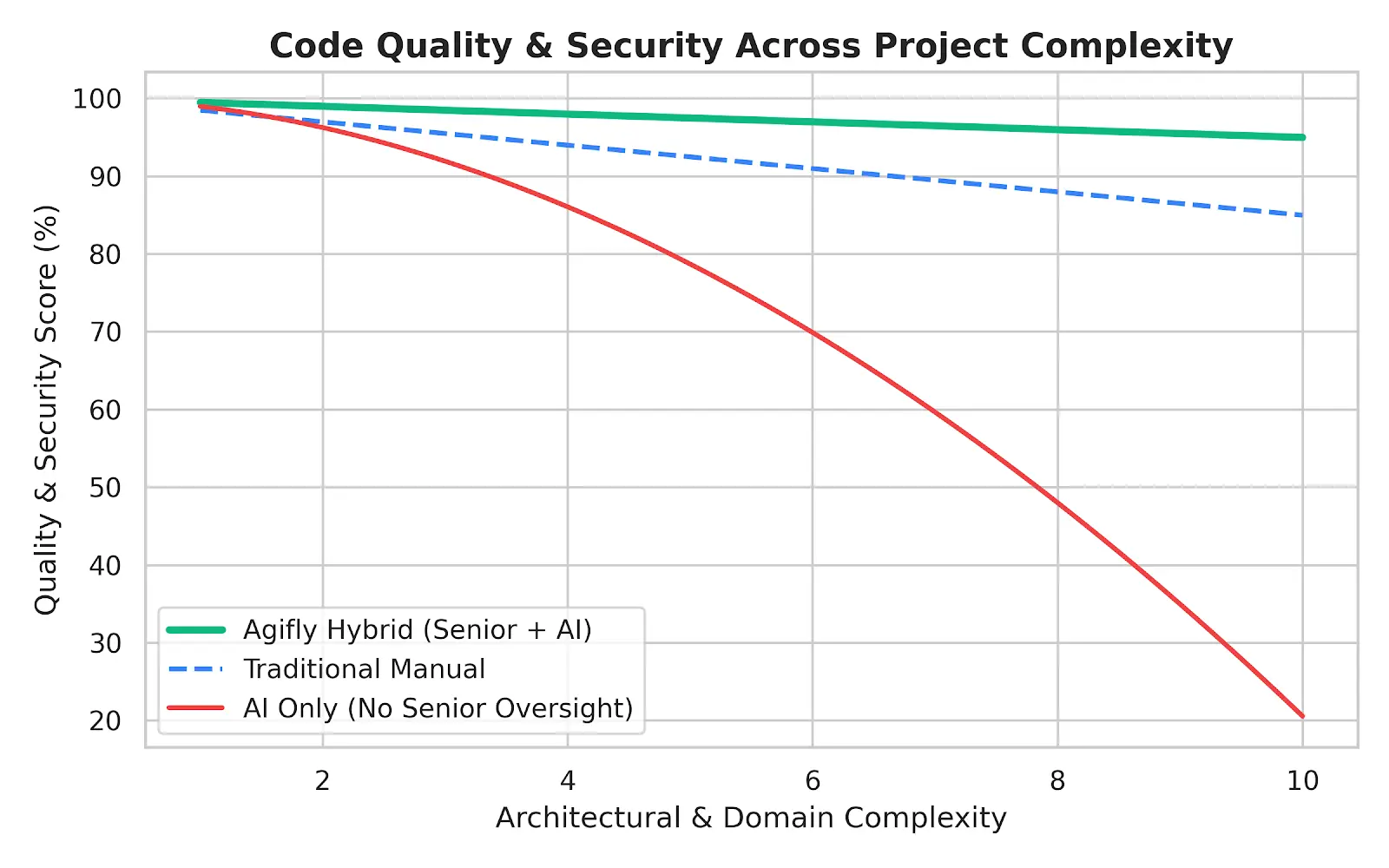
Code generation is not software engineering. Code generated by raw LLMs without expert guidance typically exhibits higher cyclomatic complexity and a significantly higher rate of security vulnerabilities. Building a local prototype that ‘looks right’ is drastically different from deploying a scalable, secure, and maintainable product. Unsupervised AI frequently generates inefficient loops (N+1 queries), fails to implement proper state management, and introduces OWASP Top 10 security flaws.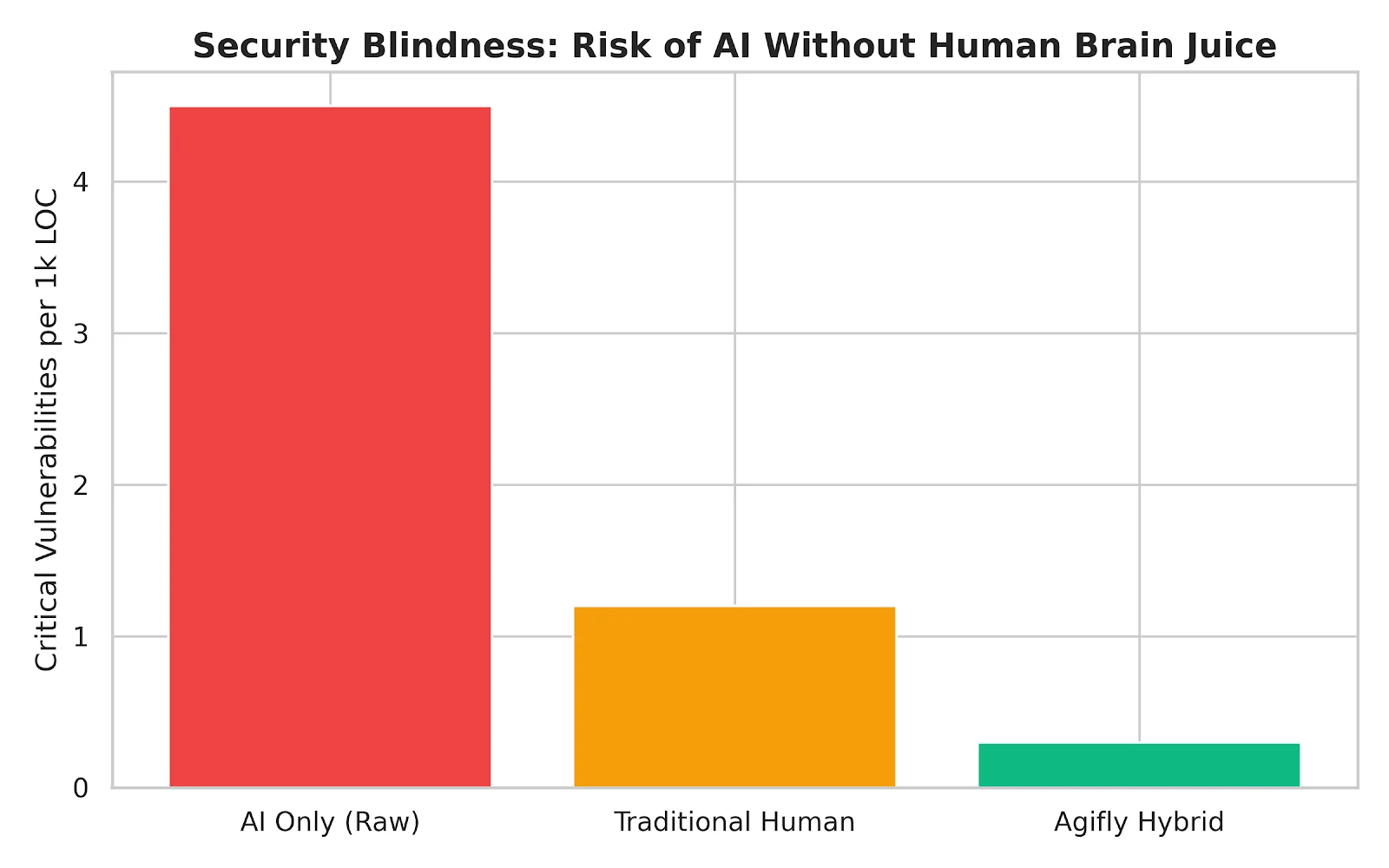
Production systems require the “Senior Filter.” Vibe coding requires the deep architectural knowledge, threat modeling, and judgment of senior developers to assess the AI’s output, spot hallucinations, and refactor inefficient logic. Without human brain juice filtering the AI’s speed, organizations accumulate technical debt rapidly. Quality code needs a senior developer to make it prod-ready.
Empowering Senior Developers: Speed with Sense
When vibe coding is placed in the hands of experienced engineers, the productivity gains are transformative. Time shifts from low-leverage mechanical typing toward high-leverage activities: domain modeling, system architecture, and complex problem-solving.
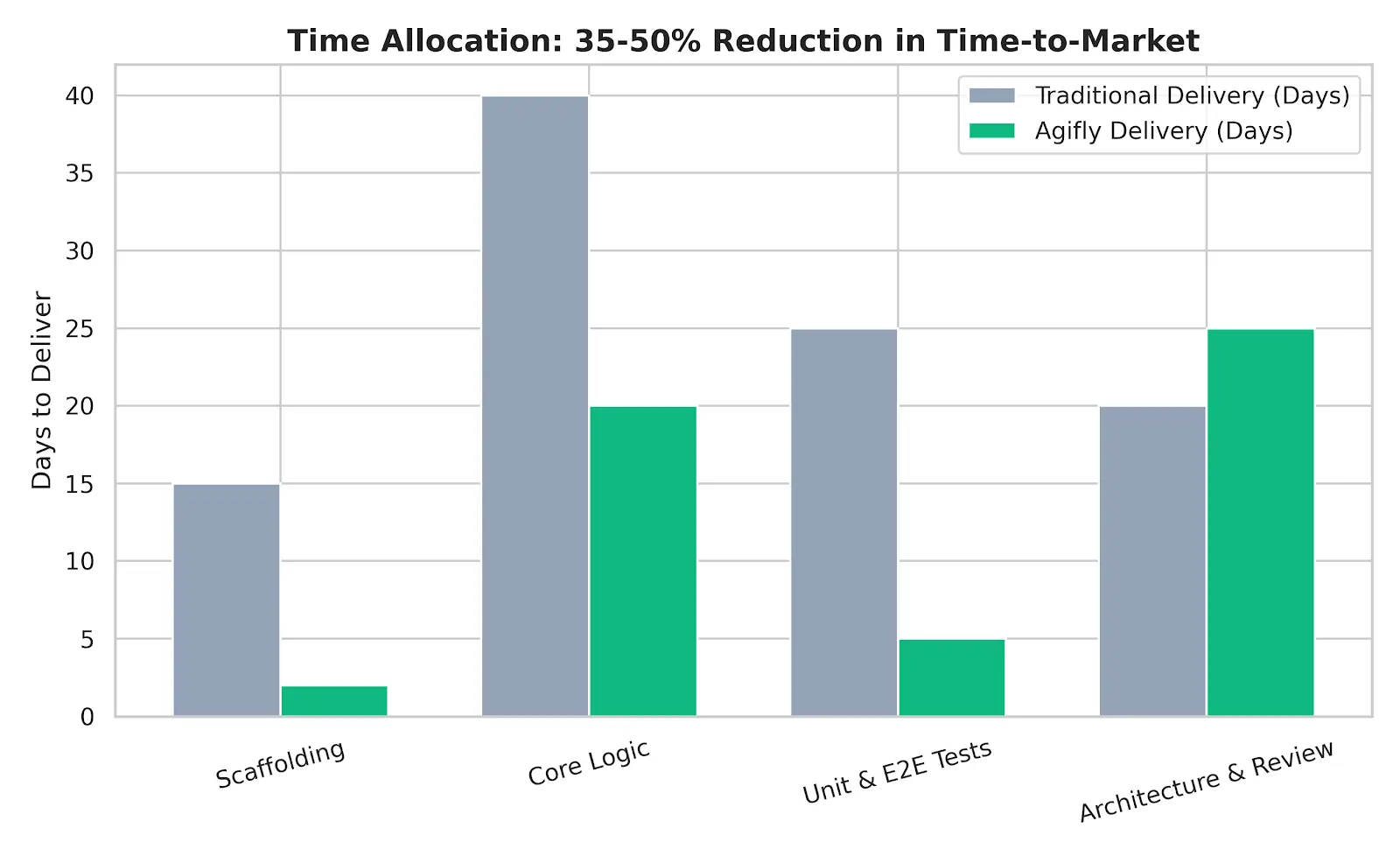
Depending on their seniority and the complexity of the domain, developers can complete specific implementation tasks 5 to 10 times faster. For example, a senior developer can use vibe coding to scaffold a complete microservice, wire up a database ORM, and generate boilerplate API endpoints in minutes instead of days. They leverage the AI’s speed but apply their human sense to ensure the architecture is solid.
The Opportunity: 100% Test Coverage is Now Viable
Historically, achieving 100% test coverage (combining exhaustive Unit Testing and End-to-End [E2E] testing) was technically possible but economically prohibitive. For most organizations, the cost of writing and maintaining tests for every edge case simply cost way too much, leading to technical debt and maintenance nightmares.
Vibe coding completely changes the economics of software quality. Because AI excels at generating pattern-based code, writing exhaustive unit tests or property-based checks is now nearly frictionless. An AI agent can ingest a complex business logic file and generate dozens of unit tests covering edge cases, null checks, and boundary conditions in seconds. Senior developers can describe user journeys, and the AI generates the corresponding Cypress or Playwright scripts.
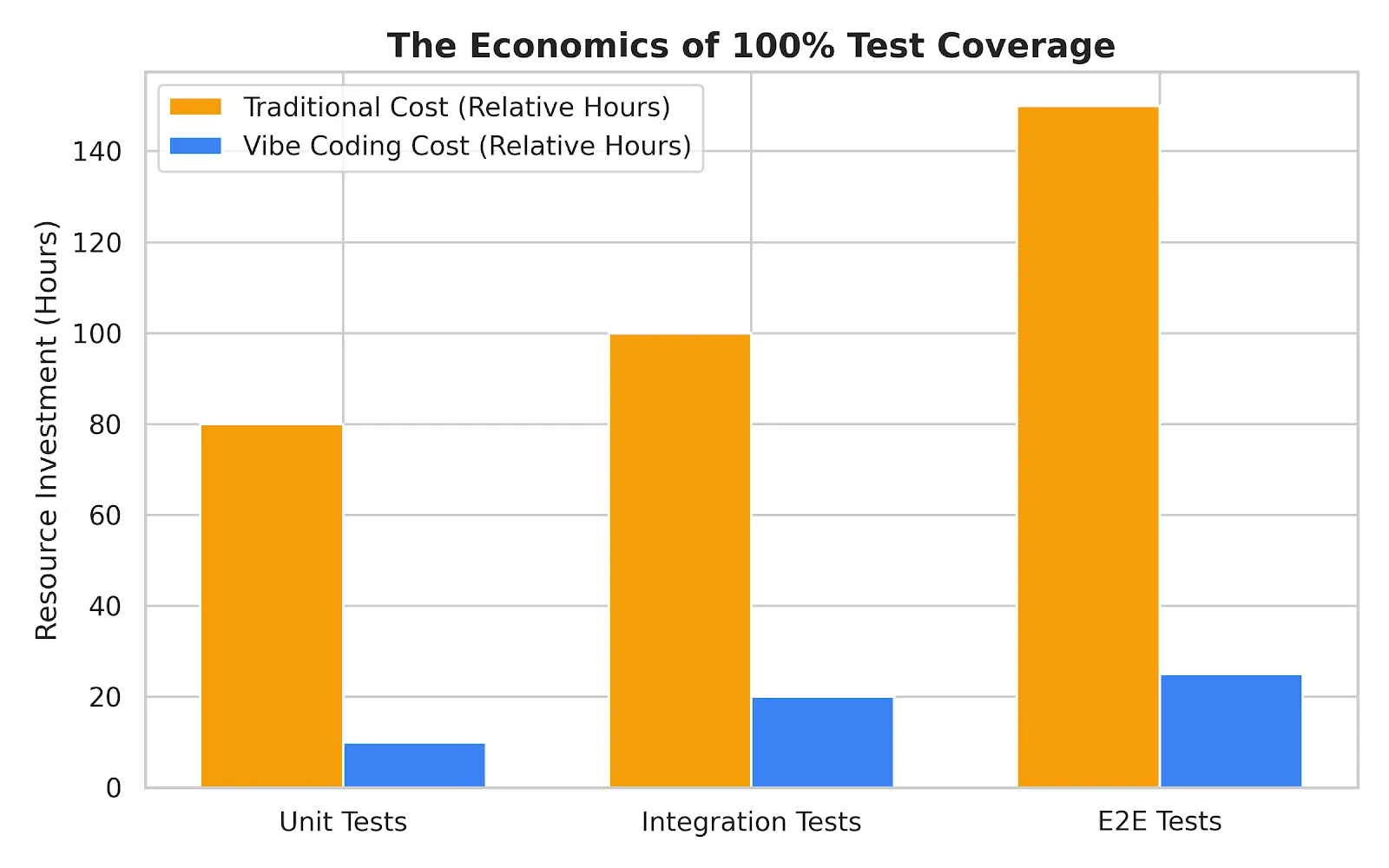
Organizations no longer have to choose between speed and reliability. Robust, 100% coverage is now a standard output of a well-executed vibe coding pipeline, leading to drastically improved long-term maintenance.
The Agifly Methodology: 2 Years of Hybrid R&D
Agifly has not simply adopted AI tools; we have spent two years in intensive R&D to learn, improve, and guarantee the best possible hybrid vibe coding framework. We recognized early that replacing developers with AI leads to fragile code, while ignoring AI leads to market obsolescence.
Our proprietary methodology integrates the raw generation power of AI with the strategic oversight of senior developers. We keep the best of both worlds: human brain juice and vibe coding. We do not aim to increase speed with non-sense. Our pipeline dictates that AI handles the “heavy lifting” (scaffolding, testing, documentation) while human engineers handle the “heavy thinking” (security, architecture, performance tuning).
Tangible ROI: 35-50% Reduction and 10k€ POCs
Through this disciplined hybrid method, we can most of the time reduce the production-ready product timeline by 35% to 50%, depending on the project scope and preliminary studies. This is not prototype speed; this is enterprise-ready, fully tested, secure production delivery.
This efficiency opens up new opportunities for business leaders. Using our hybrid vibe coding model, Agifly offers the development of any Proof of Concept (POC) in 3 weeks for less than 10,000€. Because we leverage AI to generate robust testing and standard architectures from day one, this POC is a solid foundation that can be securely scaled into a production system, making your time-to-market faster and cheaper than ever before.
Concrete Scenarios: Agifly Vibe Coding in Practice
Scenario 1: Rescuing Legacy Applications with Automated Coverage
The Challenge: A client possessed a monolithic application with 0% test coverage, making refactoring dangerous and slow.
The Agifly Solution: Using vibe coding, our senior engineers orchestrated AI agents to analyze the legacy codebase and generate a comprehensive suite of unit tests.
The Outcome: Reached 100% unit coverage on critical modules in under two weeks. Subsequent refactoring was completed 40% faster because the AI-generated safety net caught regressions instantly.
Scenario 2: Rapid API Orchestration for a Fintech Dashboard
The Challenge: A startup needed a secure, production-ready backend connecting multiple financial APIs within a strict budget.
The Agifly Solution: A senior Agifly architect designed the data contracts, then utilized vibe coding to generate the NestJS services, data transformation layers, and 100% E2E test scripts.
The Outcome: Delivered a fully functional, highly secure API layer in 3 weeks (under 10k€), operating 5x faster than traditional manual coding while maintaining banking-grade security standards.
Decision Framework: Is Your Project Ready for Vibe Coding?
Use this actionable checklist to determine if your engineering environment is prepared to leverage AI effectively without incurring technical debt:
- Domain Clarity: Is the business logic well-documented and unambiguous?
- Senior Technical Leadership: Do you have an experienced architect or senior developer responsible for code review and system design?
- Strict CI/CD Pipelines: Is there an automated pipeline to run the mass-generated AI unit and E2E tests?
- Static Code Analysis: Are tools like SonarQube integrated to automatically scan AI output for security vulnerabilities?
- Data Privacy Governance: Are you using enterprise-tier LLMs that do not train on your proprietary codebase?
Accelerate Your Delivery with Agifly
For organizations that want the unprecedented speed of vibe coding without gambling on quality or security, Agifly is your ideal partner. After 2 years of dedicated R&D, our hybrid methodology delivers the exact balance of human ingenuity and AI acceleration.
Contact Agifly today to commission a robust, production-ready Proof of Concept in just 3 weeks for less than 10,000€. Discover how we can reduce your next major release timeline by 35-50%.
Frequently Asked Questions
It is an AI-assisted development workflow where engineers use natural language to guide code generation iteratively, focusing on business intent rather than manual syntax typing.
No. Production systems require deep architectural, domain, and security knowledge. AI currently lacks this contextual understanding, making senior human oversight mandatory to make code quality and prod-ready.
Depending on their seniority, developers can be up to 5 to 10 times faster on specific tasks like scaffolding or test generation, leading to an overall project timeline reduction of 35-50%.
Not by default. Unsupervised AI code can contain up to 3x more security vulnerabilities than human-written code. It requires strict human review, ‘brain juice’, and automated security scanning.
Absolutely not. Senior developers are the biggest beneficiaries of this shift. They possess the necessary judgment to filter, refine, and harden AI output into production-ready software.
Junior developers are at a much higher risk of accumulating ‘hallucination debt’. They should utilize AI tools strictly under the mentorship and review of senior engineers.
It radically improves it. By automating the boilerplate portions of unit and E2E test writing, achieving 100% coverage is now highly affordable and realistic for most projects, drastically improving maintenance.
The Agifly Way is a hybrid methodology refined over 2 years of R&D. It combines ‘human brain juice’ (senior engineering logic and architecture) with AI vibe coding to maximize speed while guaranteeing top-tier quality, rather than increasing speed with nonsense.
Using our advanced hybrid vibe coding framework, Agifly can deliver a secure, robust POC in exactly 3 weeks for less than 10,000€.
The first step is establishing a ‘Senior-in-the-Loop’ policy, setting up robust CI/CD pipelines, and conducting a low-risk, 3-week POC with an expert team like Agifly.