

Every SME in Northern France and Belgium today faces a major challenge: how to ensure growth in an economy where competition and innovation are accelerating. Understanding the complete strategic mutation implied by digital transformation enables us to envisage profound changes in working methods and optimize every process. This guide highlights the essential fundamentals for tackling digitalization with confidence, and building a real and lasting advantage.
Table of contents
Key findings
| Point | Details |
| Incontrovertible Digital Transformation | Digital transformation is a strategic necessity if SMEs are to remain competitive in the modern economy. |
| Commitment and a culture of innovation | Total management commitment and a culture of innovation are essential for successful digital transformation. |
| Methodical approach required | SMEs need to adopt a methodical approach, including a digital diagnosis before implementing technological solutions. |
| Risk prevention | Anticipation of internal resistance and ongoing training are crucial to avoid digitalization failures. |
Definition and fundamentals of digital transformation
Digital transformation is much more than a simple technological adoption: it’s a complete strategic mutation of business models. Digital transformation is becoming a critical imperative for SMEs wishing to remain competitive in the modern economy.
This global approach implies a profound overhaul of internal processes, working methods and organizational culture. It is not limited to the implementation of technological tools, but requires a strategic vision that aligns technology with business objectives.
The main thrusts of the digital transformation include :
-
Reorganization of internal processes
-
Integration of emerging technologies
-
Developing new digital skills
-
Optimizing data collection and analysis
-
Continuous improvement of the customer experience
Digital transformation is not an option, but a strategic necessity for any modern company.
To succeed in this transformation, SMEs need to adopt a methodical approach that takes into account their specific ecosystem. A complete reorganization involves rethinking working methods and gradually integrating new technologies.
Companies also need to understand that digital transformation is a dynamic and ongoing process. It requires constant commitment, a learning culture and the ability to adapt quickly to technological change.
Pro Tip: Start your digital transformation with an accurate assessment of your current processes, and identify areas where digital technologies can bring significant value.
Main levers and types of digitalization in SMEs
Digitizing SMEs is a complex, multi-dimensional process that involves much more than just technological modernization. The main levers of digital transformation cover the strategic, organizational and technological dimensions essential to modern competitiveness.

Types of digitalization can be classified according to several fundamental axes, each bringing unique strategic value to the company. Today’s SMEs can exploit different digital approaches to improve their performance and resilience.
The main types of digitization include :
-
Digitalized customer management
-
Automating internal processes
-
Integration of artificial intelligence technologies
-
Development of e-commerce platforms
-
Implementation of customer relationship management (CRM) systems
Digital transformation is not a choice, but a strategic necessity for the survival of modern businesses.
Adopting these digital levers requires a methodical, step-by-step approach. Advanced technologies improve resilience by enabling SMEs to adapt and innovate rapidly.
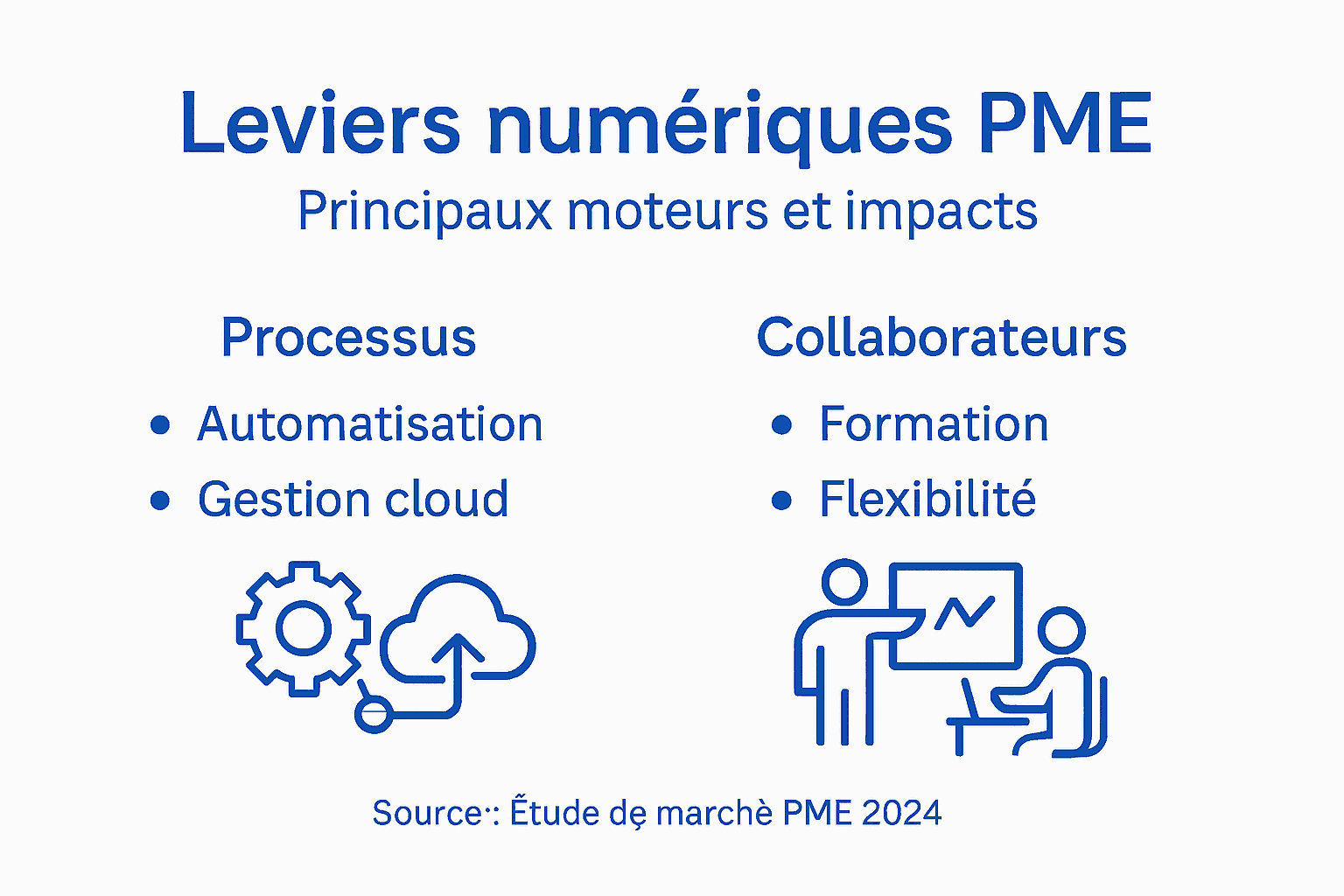
Each type of digitalization requires investment in skills, technology and infrastructure. Companies therefore need to develop a clear strategic vision and ongoing support to succeed in their digital transformation.
Pro tip: Carry out a precise digital diagnosis of your company before launching your digitalization projects, identifying your specific needs and current capabilities.
Examples of concrete applications for local businesses
Digital transformation offers local businesses concrete and immediately applicable opportunities to improve their performance. Digital transformation projects tailored to SMEs demonstrate how technological innovation can meet the specific needs of the local economic fabric.
Every business sector can benefit from tailor-made digital solutions, radically transforming traditional working and management methods. These practical applications enable local businesses to become more efficient, competitive and responsive.
Examples of the most relevant numerical applications include :
-
Customized customer management systems
-
Local e-commerce platforms
-
Tools for automating internal processes
-
Targeted digital marketing solutions
-
Real-time performance monitoring and analysis systems
Digitalization is not a threat, but a growth opportunity for local businesses.
Digital solutions significantly improve internal management by enabling smoother organization and faster decision-making. Companies can now optimize their resources and strategy with the right technological tools.
Here is a comparative summary of the main impacts of digital transformation by business sector:
| Sector | Main benefit | Example of improvement |
| Trade | Extended customer access | Online store creation |
| Industry | Process optimization | Automation of production lines |
| Services | Customer management system | Personalized customer relations |
| Crafts | Targeted digital promotion | Use of local social networks |
Successful implementation of these solutions requires a progressive approach, focused on the specific needs of each company and on building the skills of its teams.
Pro tip: Start by identifying the most time-consuming internal processes, and select digital solutions that will streamline them immediately.
Organizational impacts and success factors
Digital transformation is more than just technological modernization, it’s a profound transformation of organizational structures. Changes in work processes imply a complete reconfiguration of collaboration and management methods.
Every company needs to develop a digital transformation strategy that takes account of its specific cultural and operational characteristics. The most agile and responsive organizations will be those that manage to integrate new technologies harmoniously.
Key organizational success factors include:
-
Total management commitment
-
A culture of innovation and learning
-
Ongoing team training
-
Transparent communication
-
Flexibility and structural agility
Successful digital transformation depends more on people than technology.
Managers play a crucial role in driving change, by instilling a strategic vision and motivating their teams. Their ability to anticipate and support the transition will be decisive.
Adapting human resources is a major challenge, requiring a gradual, collaborative approach that makes the most of individual and collective skills.
Pro tip: Launch small-scale pilot projects to test new technologies and create a positive collective learning dynamic.
Common mistakes and risks to anticipate
Digital transformation brings with it many potential pitfalls that can compromise the success of digitalization projects. The major risks associated with digital innovation call for a proactive, methodical approach.
Every company needs to develop a thorough understanding of potential obstacles to minimize the risk of failure. Preparation and vigilance are essential to transform these challenges into growth opportunities.
The most critical mistakes to avoid include:
-
Underestimation of the complexity of change
-
Lack of team training
-
No clear strategic vision
-
Cultural resistance to change
-
Poorly targeted technology investments
Successful digital transformation begins with an honest acknowledgement of one’s own vulnerabilities.
Managers need to anticipate internal resistance and put in place appropriate change management mechanisms. Transparent communication and progressive team involvement are key success factors.
Ongoing risk assessment, particularly of ethical and technological risks, helps us to maintain a dynamic of adaptation and resilience in the face of digital change.
This table summarizes the main organizational risks and associated prevention methods:
| Major risk | Possible consequence | Prevention method |
| Resistance to change | Failure to integrate | Ongoing training and dialogue |
| Poorly targeted technological investment | Financial loss | Prior needs analysis |
| Lack of strategic vision | Inconsistent projects | Development of a digital roadmap |
| Lack of communication | Internal misunderstandings | Setting up information sessions |
Pro tip : Carry out a complete digital audit prior to any transformation project, involving all stakeholders and precisely identifying your points of vulnerability.
Boost your SME with digital transformation
Digital transformation is a major strategic challenge for SMEs wishing to remain competitive in ever-changing markets. Faced with the need to reorganize processes, methodically adopt digital technologies and build skills, it’s essential to rely on a partner capable of designing scalable digital solutions tailored to your reality.
Agifly supports you in this transformation by offering intelligent design and scalable development that fit perfectly with your business objectives.
Don’t wait any longer to take the step towards successful digitalization that combines performance and sustainable innovation. Visit our website and explore our solutions on Agifly as well as our complementary resources to propel your SME into the future.
Frequently asked questions
What does digital transformation mean for SMEs?
Digital transformation is a comprehensive strategic shift that integrates digital technologies into business models, involving an overhaul of internal processes and organizational culture.
What are the main thrusts of our digital transformation?
Key areas of focus include reorganizing internal processes, integrating emerging technologies, developing digital skills, and improving the customer experience.
What types of digitalization can SMEs adopt?
SMBs can adopt types of digitalization such as digitalized customer management, automation of internal processes, and the development of e-commerce platforms.
What are the key factors for successful digital transformation?
Key factors include management commitment, a culture of innovation, ongoing team training, and transparent communication within the organization.